
What My First Time Car Camping with Dog Taught Me About Wilderness Trips
Meta Description: Discover the hard lessons I learned during my first time car camping with dog. Read my comprehensive SUV camp log pet story and avoid common beginner mistakes.
I still vividly remember the absolute, unbridled excitement I felt while packing up my vehicle for what was supposed to be a picture-perfect overland weekend. I had spent countless hours scrolling through social media, staring enviously at flawless photos of adventurous women and their perfectly behaved Golden Retrievers lounging in the back of cozy, fairy-light-lit SUVs. Inspired by these cinematic digital landscapes, I decided it was time to embark on my very own backcountry journey. However, the raw, unfiltered reality of my first time car camping with dog was vastly different from the curated aesthetics I had seen online. It was messy, it was chaotic, and it was one of the most profoundly educational weekends of my entire life.
If you are planning to hit the rugged mountain trails and sleep in your vehicle with your four-legged best friend, you are undoubtedly in for an incredible bonding experience. But navigating that initial trip comes with a remarkably steep learning curve. I decided to document every single triumph, disaster, and late-night revelation in this highly detailed SUV camp log pet edition, hoping that my personal story will help you avoid the pitfalls I stumbled into headfirst. From navigating midnight mud disasters to understanding complex canine thermal regulation, here is the unfiltered truth about what my first time car camping with dog actually taught me.
Traveling with a pet requires a fundamental shift in how you view the outdoors. You are no longer just responsible for your own warmth, hydration, and safety; you are managing the well-being of a creature that cannot explicitly tell you when they are freezing, thirsty, or terrified. This guide is designed to bridge the gap between the beautiful fantasy of overlanding and the practical, sometimes gritty reality of keeping your pet safe and comfortable in the wild.
The Romantic Expectation vs. The Muddy Reality
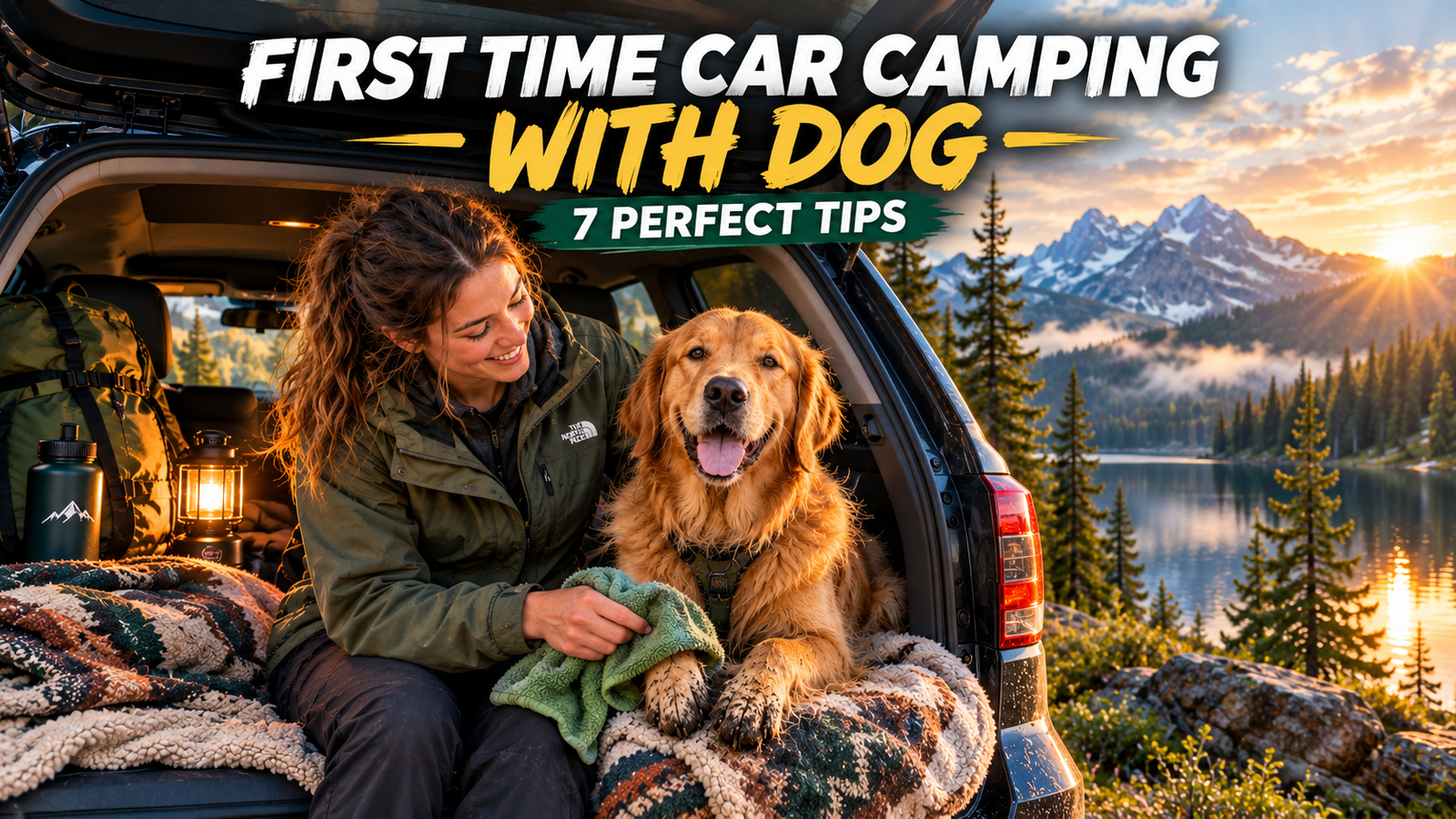
In my mind, my first time car camping with dog was going to look exactly like a high-end outdoor magazine spread. I envisioned my rescue Golden Retriever peacefully resting on a crisp white duvet while I sipped artisanal pour-over coffee from an enamel tin mug, watching the sunrise over a pristine, glass-like alpine lake. I had enthusiastically packed a beautiful, fluffy indoor dog bed, a woven aesthetic throw blanket, and exactly zero heavy-duty cleaning supplies. This incredibly naive preparation led directly to my very first, and messiest, beginner mistake dog camp disaster.
We arrived at our dispersed campsite deep in the national forest just as a light, misty drizzle began to fall. By the time we finished our inaugural evening hike to stretch our legs, my majestic, golden-haired companion had transformed into a literal swamp monster. His paws were caked in thick, black, adhesive alpine mud, his belly was soaked with pine-scented puddle water, and he was eager to jump straight into the back of my freshly detailed SUV. Because I hadn't packed microfiber towels, a portable shower, or a dedicated paw washer, I spent forty-five minutes frantically wiping him down with my own expensive fleece jacket just to protect our sleeping setup.
The lesson here was immediate, harsh, and unforgettable. When embarking on your first time car camping with dog, you must fundamentally treat your vehicle's interior like a sterilized clean-room that is constantly under siege by the forces of nature. I now travel with an extensive arsenal of quick-dry microfiber pet towels, a portable silicone paw washer filled with warm water, and heavy-duty, unscented grooming wipes. Wiping your dog down thoroughly before they even cross the threshold of the tailgate is the only guaranteed way to maintain your sanity, hygiene, and the longevity of your gear over a multi-day trip.
The Sleep Setup Disaster: The Importance of a Level Surface
My second major beginner mistake dog camp oversight involved the actual mechanics of sleeping inside an SUV. I had simply folded the rear passenger seats flat, tossed a standard nylon sleeping bag on the hard floor, and naturally assumed my dog would curl up next to me in peaceful slumber. I drastically underestimated how incredibly uncomfortable the hard, uneven ridges, seatbelt buckles, and plastic gaps of a folded-down cargo area can be, especially for a large breed dog with sensitive, aging joints.
During my first time car camping with dog, neither of us slept for more than an hour at a time. Every time my dog shifted his heavy weight to find a more comfortable position, he would slide slightly down the natural incline of the folded seats, inevitably ending up wedged uncomfortably against the rear passenger doors. His restless pacing, heavy panting, and constant repositioning kept me awake. By 3:00 AM, we were both completely exhausted, physically sore, and emotionally frustrated. The cold metal floor actively leached away our precious body heat, and the distinct lack of proper orthopedic support made the night feel agonizingly long.
This agonizing experience forced me to completely rethink and rebuild my overland setup. Before my next trip, I invested significant time and resources into building a perfectly level, elevated wooden sleeping platform in the trunk. I topped this platform with a thick, custom-cut, high-density memory foam mattress. A comfortable, pain-free dog is a quiet, restful dog. If you want your first time car camping with dog to be a resounding success, you must invest in a comprehensive sleep system that isolates both of you from the freezing vehicle chassis and provides a perfectly flat, supportive surface.
Battling the Elements: Condensation and Thermal Regulation
Another critically important entry in my SUV camp log pet journal revolves around vehicle climate control. I had falsely assumed that sleeping inside a heavy metal box with all the doors locked and windows sealed would keep us perfectly warm and dry against the mountain chill. I was catastrophically wrong. As the mountain temperatures dropped rapidly near freezing after sunset, I decided to keep all the windows rolled up tightly to preserve our ambient body heat. This was a massive, uncomfortable miscalculation.
A human and a large dog continuously exhaling inside a small, sealed vehicle all night produce an immense, almost unbelievable amount of moisture. I woke up at dawn during my first time car camping with dog to find the interior glass windows completely opaque with heavy, dripping condensation. Worse, the accumulated moisture had begun actively dripping off the ceiling liner directly onto our sleeping bags, leaving us damp, cold, and shivering in the morning light. I learned the hard way that active ventilation is absolutely critical, even in freezing weather.
To combat this swamp-like environment, I now employ a strict, non-negotiable ventilation strategy. No matter how brutally cold it is outside, I crack two opposite windows about an inch and a half to create a continuous cross-breeze. I installed custom magnetic mesh window screens to keep mosquitoes and pine needles out, and exterior rain deflectors so I can keep the windows cracked even during a torrential downpour. Additionally, I utilize insulated, reflective window covers to trap radiant heat inside while managing moisture. Navigating these delicate vehicle microclimates is one of the steepest learning curves you will face during your first time car camping with dog.

Managing Nighttime Anxiety in the Wild
Dogs possess incredibly acute hearing, which is a wonderful, comforting trait for a guard dog at home, but a uniquely challenging one during your first time car camping with dog in the deep, isolated backcountry. My Golden Retriever is normally a highly confident, relaxed animal, but the complex acoustic environment of a dark, unfamiliar forest is filled with rustling leaves, snapping twigs, howling wind, and the distant, unsettling calls of nocturnal wildlife.
Throughout that long first night, every single time a squirrel ran across the metal roof of the SUV or a deer moved through the dry brush nearby, my dog would immediately stand up, stiffen his posture, and let out a low, vibrating, defensive growl. His anxiety was palpable and infectious, and it made me highly anxious in return. A very common beginner mistake dog camp error is simply expecting your dog to instantly acclimate to the overwhelming sensory overload of the wild without any active support.
To help him settle down and feel secure, I realized I needed to proactively create a sense of safety, familiarity, and routine inside the vehicle. Now, I always bring a familiar, unwashed blanket from home that smells exactly like our living room couch to comfort him. I also play a dedicated white noise app on my smartphone at a low, steady volume to effectively drown out the erratic, unpredictable sounds of the forest. Turning the interior of the SUV into a dark, familiar, and acoustically controlled "den" drastically reduced his nighttime alertness, a psychological technique I highly recommend for anyone planning their first time car camping with dog.
Food and Hydration: Managing Meals on the Trail
One aspect of overlanding I completely underestimated was how the change in environment would affect my dog's appetite and hydration needs. At home, he eats his kibble on a strict schedule without issue. However, during my first time car camping with dog, the combination of altitude, excitement, and slight anxiety caused him to completely ignore his dinner bowl the first night.
This is a common phenomenon. When dogs are overstimulated by new scents and sights, their drive to eat plummets. But because they are burning significantly more calories hiking and staying warm, maintaining their caloric intake is vital. To solve this during subsequent trips, I began incorporating high-value "toppers" into his camp meals. A spoonful of wet food, some dog-safe bone broth, or freeze-dried meat mixers instantly transformed his boring kibble into an irresistible backcountry feast.
Hydration is equally, if not more, critical. The dry mountain air aggressively strips moisture from panting dogs. Never assume your dog will drink enough from natural streams, as these can also carry harmful parasites like Giardia. I now carry a dedicated three-gallon jug of filtered water specifically for him, and I proactively offer him a collapsible bowl every hour during hikes and immediately upon returning to the vehicle. Mastering your dog's nutrition and hydration is a cornerstone of a successful first time car camping with dog experience.
Morning Routines: Waking Up in the Wild
The way you handle the morning sets the tone for the entire day of camping. After surviving our chaotic first night, I realized we lacked a structured morning routine. Waking up in a cramped vehicle requires choreography. During my first time car camping with dog, I simply opened the tailgate and let him bolt out into the forest while I was still half-asleep. This resulted in him immediately finding a patch of wet mud to roll in before I had even put my boots on.
Now, our morning routine is military-grade. Before I open any doors, I leash him up inside the vehicle. I put my boots and jacket on first. Then, we exit together in a controlled manner. I guide him directly to a designated bathroom area away from our immediate campsite. Establishing this strict boundary prevents him from wandering into neighboring camps or encountering wildlife that might be passing through the area at dawn.
Following the bathroom break, we have a calm breakfast. I boil water for my coffee while he eats his enhanced kibble on his outdoor mat. This structured, predictable start to the day completely eliminates morning anxiety and prevents the kind of chaotic messes that ruined the start of my first time car camping with dog. Predictability is a dog's best friend in an unpredictable environment.
Safety First: Wildlife and Environmental Ethics
While the focus of overlanding is often on personal comfort and aesthetic vehicle builds, safety and environmental stewardship must be the true, underlying priorities. During that chaotic first trip, I carelessly left his stainless steel food bowl outside on the ground after dinner. Thankfully, we only attracted a curious family of raccoons that night, but in active bear country, that simple, careless oversight could have been deadly for both of us.
Practicing proper backcountry ethics is absolutely non-negotiable. This means utilizing heavy-duty, airtight, lockable storage containers for all pet food, bones, and treats, and never, ever leaving them outside the vehicle unattended. Even the scent of dog food can draw predators for miles. Furthermore, adhering strictly to the principles outlined by organizations like the Leave No Trace Center for Outdoor Ethics ensures that we protect the fragile, beautiful ecosystems we love to explore.
Packing out every single dog waste bag is mandatory, regardless of how inconvenient it is. Burying dog feces near a pristine mountain lake or kicking it off the trail disrupts the local flora and fauna, introduces foreign pathogens, and directly leads to severe trail restrictions and bans for future pet owners. Being a responsible steward of the land is the most important lesson you will learn during your first time car camping with dog.
Essential Gear I Wish I Had on Day One
If I possessed a time machine and could travel back to hand myself a comprehensive survival kit for my first time car camping with dog, it would include a few highly specific, game-changing items that instantly transform a miserable night into a cozy, luxurious overland retreat. Here is my definitive, battle-tested SUV camp log pet checklist for absolute beginners:
- Heavy-Duty Microfiber Pet Towels: Standard household cotton is useless in the damp wilderness. Microfiber absorbs thick mud and water rapidly and dries out completely in the morning sun.
- A Custom Level Sleeping Platform: Do not rely on folded seats. Build or buy a flat wooden platform and top it with dense, orthopedic memory foam to protect your dog's aging or tired joints.
- Exterior Window Deflectors (Rain Guards): The absolute only reliable way to maintain crucial cabin cross-ventilation overnight without letting freezing rain pour into your sleeping space.
- Custom Insulated Window Covers: Vital for trapping radiant body heat in the winter, blocking the intense sun in the summer, and providing complete privacy and a dark, secure den for an anxious pet.
- Tactical Tie-Out Cable or Long Line: Keeping your dog securely tethered at camp prevents them from blindly chasing wildlife, getting lost, or wandering into neighboring, less dog-friendly sites.
- Airtight, Bear-Proof Food Storage: Keeps expensive kibble fresh and completely prevents the scent from attracting bears, raccoons, or rodents to your vehicle during the night.
- Canine First Aid Kit: Essential for treating torn paw pads, removing ticks, or wrapping minor scrapes sustained on rocky trails before you can reach a vet.
Step-by-Step Guide for a Successful First Time Car Camping With Dog
To guarantee your first time car camping with dog is a resounding, joyful success rather than a stressful, exhausting ordeal, I highly recommend following a structured, phased pre-trip protocol. Do not just pack your bags and drive into the mountains blind. Start by conducting a realistic "dry run" right in your own driveway or garage.
Set up your entire interior sleeping arrangement exactly as you would at camp. Bring your dog inside the vehicle, give them a high-value chew toy, and spend an hour just reading a book or watching a movie together in the back. This critical step introduces them to the enclosed, unique space of the car without the added stress of a new, frightening environment and strange smells.
Next, carefully and meticulously research your destination. Confirm through official forest service websites that the specific trails and dispersed campsites are explicitly dog-friendly. Many National Parks strictly forbid dogs on unpaved paths, which can ruin an itinerary. Additionally, map out the exact location and phone number of the nearest emergency 24-hour veterinary clinic to your campsite just in case of an unforeseen accident.
Finally, when you arrive at your chosen camp, establish a firm routine immediately. Feed your dog at their normal, expected time, take them for a long, physically exhausting walk before the sun sets to burn off anxious energy, and go through a deliberate, calm settling process before getting into the vehicle for the night. Routine is the ultimate, proven antidote to canine anxiety, ensuring your first time car camping with dog is a trip you will want to repeat.
Frequently Asked Questions About First Time Car Camping With Dog
Where does the dog actually sleep when car camping?
For maximum safety and comfort during your first time car camping with dog, your pet should sleep on a flat, properly insulated surface next to you in the back cargo area of the SUV. They should not sleep on the cold, cramped front seats or in the floorboards. A memory foam bed placed on a level wooden platform is the ideal setup.
How do I effectively keep my dog warm at night in the car?
You must insulate them from the bottom up. The metal vehicle chassis gets freezing cold, so use a thick foam pad as a base layer. Wrap them in a thermal fleece blanket or invest in a canine-specific sleeping bag, and always use reflective window covers to trap your combined ambient body heat inside the cabin.
Is it safe to sleep in a car with the windows completely rolled up?
Absolutely not. A very common beginner mistake dog camp error is sealing the car completely to stay warm. You must always crack at least two windows (preferably opposite each other) to allow for fresh oxygen exchange and to prevent severe, dripping moisture condensation from building up inside the vehicle overnight.
How do I clean my dog before letting them into the SUV?
Set up a "cleaning station" at the bumper. Use a portable silicone paw washer cup filled with water to remove mud from their feet, then follow up with a thorough wipe-down using heavy-duty, unscented grooming wipes and a microfiber towel. Never let a wet dog directly onto your sleeping gear.
Should my dog be tethered at the campsite?
Yes. Even if your dog has perfect recall at home, the wilderness is full of unpredictable triggers like deer, bears, and other campers. Using a sturdy 15-foot tie-out cable allows them freedom to roam and sniff the immediate campsite while ensuring they cannot bolt into the dense woods.
Conclusion: Embracing the Messy Reality
Looking back, my first time car camping with dog was a wild mix of chaos, mud, and unforgettable bonding. It wasn't the picture-perfect aesthetic I had initially seen on social media, but the messy, unfiltered reality taught me invaluable lessons about outdoor preparedness, patience, and true partnership with my rescue pet.
If you are actively planning your own wilderness adventure, remember that your first time car camping with dog absolutely does not have to be flawless. Expect the unexpected, make sure to pack an abundance of heavy-duty microfiber towels, and focus your energy on creating a comfortable, secure thermal environment for your furry best friend rather than worrying about a little dirt on your seats.
Ultimately, the muddy paws and those few sleepless hours were completely worth it. Every single mistake I made during my first time car camping with dog laid the solid foundation for all the successful, stress-free backcountry overland trips we enjoy today. So grab your gear, embrace the steep learning curve, and hit the road with confidence!
Upgrade Your Overland Setup Today!
Do not let poor preparation and lack of gear ruin your wilderness adventure. Equip your vehicle with the absolute best moisture-wicking towels, heavy-duty memory foam beds, and thermal window insulation today to ensure your pet travels in maximum comfort and safety.
Hit the Road, Camp with Paws! Discover more detailed personal survival stories, expert overland gear reviews, and comprehensive vehicle camping guides at CarCampingPaws.com.
3 Comments
Comments are closed.