Introduction
Car camping with a single dog is a wonderful weekend adventure, but doubling the paws means completely reinventing your preparation strategy. When you hit the road with two dogs, your SUV transforms from a simple vehicle into a mobile home, a bedroom, and a safety capsule all at once. Packing for an outdoor expedition with multiple large pets requires a delicate, smart balance between gear storage efficiency, human passenger comfort, and most importantly, absolute pet safety. It sounds simple on paper, but organizing a tight automotive space for an overland journey can quickly become overwhelming without a structured blueprint.
Many first-time campers make the mistake of simply throwing everything into the trunk, assuming things will settle naturally during the drive. However, failing to pack strategically creates massive hidden risks. A single sudden brake on a winding mountain road can instantly turn loose gear, like heavy cast-iron skillets or camping stoves, into dangerous projectiles flying toward the front seats. Furthermore, haphazard packing often leaves your pups cramped, anxious, and uncomfortable in the back, leading to restless behavior, panting, and stress before the road trip even truly begins. To enjoy a genuinely stress-free journey through the backcountry, managing your vehicle’s layout is all about prioritizing your dogs’ physical security while securing your equipment with professional-grade stability.
Prioritize a Dedicated and Guarded Pup Zone
Before you load a single sleeping bag, cooler, or camping stove into your vehicle, you need to firmly designate and protect the exact physical space where your dogs will travel. This is non-negotiable for highway safety. Installing a sturdy, vehicle-specific metal or mesh cargo barrier is one of the wisest investments you can make. This physical barrier acts as a protective shield, securely keeping your dogs in the cargo area or backseat zone. It completely prevents them from unexpectedly jumping into your lap or the front footwells while you are navigating technical dirt roads, sharp turns, or high-speed highways. Additionally, it serves a dual purpose by keeping stacked camp gear from sliding backward onto your pets during steep hill climbs.
For those who prioritize maximum highway road safety, placing your dogs inside individual, crash-tested travel crates anchored directly to the vehicle’s frame remains the absolute gold standard of pet travel. Crates provide a secure, den-like environment that lowers anxiety for nervous travelers. However, if your SUV’s dimensions require your dogs to travel directly on the rear passenger seats, a heavy-duty, waterproof seat hammock is your best alternative. These hammocks stretch between the front and rear headrests, protecting your valuable upholstery from sharp claws, heavy mud, trapped water, and shedding hair. More importantly, they create a physical bridge over the rear footwells, safely preventing a dog from slipping down into the empty floor space during sudden, unexpected stops.
Pack Heavy Gear Low, Forward, and Tightly Secured
Maintaining vehicle stability while driving on rugged, unpaved backcountry trails comes down to basic physics and weight distribution. A top-heavy SUV is highly prone to excessive body roll, poor braking performance, and even dangerous tipping on off-camber trails. Therefore, the golden rule of overlanding must be strictly enforced: always keep your heaviest items loaded low to the ground, pushed as far forward toward the center of the vehicle as possible, and tightly anchored down.
Begin building your cargo foundation by loading the heaviest base layers first. Position bulky high-weight items, such as premium rotomolded coolers, heavy water jugs, recovery gear, and your camp kitchen setup, directly against the back of the rear passenger seats or on the floorboards if the seats are folded down. Never rely on the friction of other bags to keep these items in place. Always utilize your SUV’s built-in factory cargo tie-down points paired with high-quality ratchet straps or heavy-duty bungee cords. In an emergency evasive maneuver or a sudden stop at sixty miles per hour, an unsecured fifty-pound cooler transforms into a lethal force capable of causing catastrophic injury to human passengers and your pets alike. Once the heavy base is locked down, lighter soft items like clothing duffels, sleeping bags, and camp chairs can be packed securely on top.
Protect Your Mobile Sleeping Setup from Destructive Claws
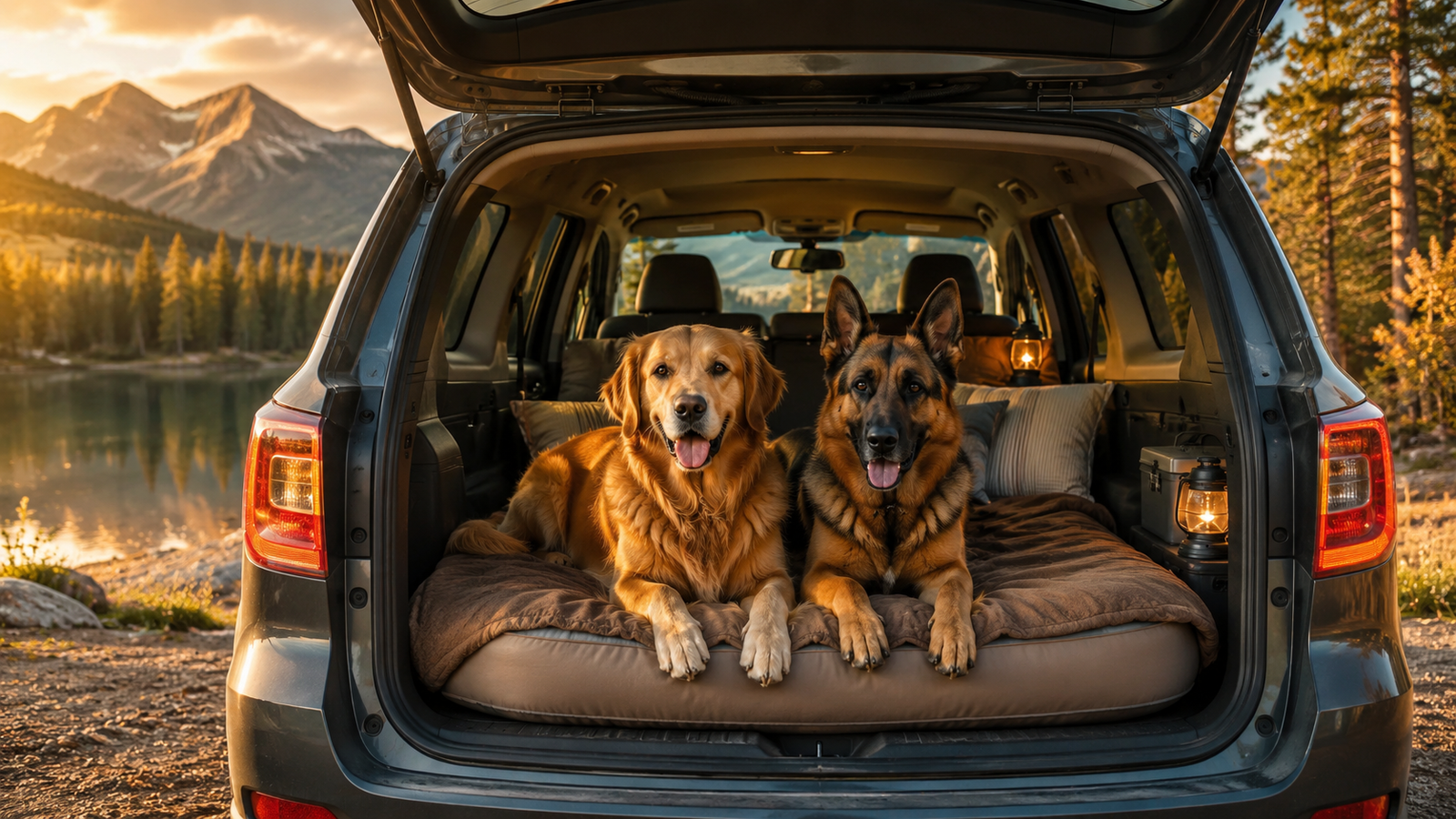
If you plan to sleep directly inside your SUV—which is arguably one of the greatest benefits of car camping—your bed setup will likely remain laid out or rolled up right next to your pets during both the driving and resting portions of the trip. This proximity introduces a major structural vulnerability: a dog’s natural claws. Standard household air mattresses or cheap pool floats are made of thin PVC plastics that will instantly puncture under the concentrated pressure of a large breed’s nails, leaving you sleeping miserably on a cold, hard metal floorboard by midnight.
To guarantee an uninterrupted, comfortable night’s sleep for the entire crew, your sleeping platform must be built from the ground up using specialized fabrics engineered to resist pet wear. Look for mattresses featuring highdensity, scratch-resistant fabrics like 600D Oxford nylon or reinforced laminated TPU materials. These industrial-grade fabrics easily shrug off dog scratches, dirt, and heavy weights without losing air pressure. Before you finalize your packing checklist and head out into the wilderness, ensure you have a durable, claw-proof sleeping pad ready to go. You can read our comprehensive, hands-on round-up of the 5 Best SUV Mattresses for Car Camping with Large Dogs to easily find a rugged, field-tested option that effortlessly handles the combined weight and sharp nails of two highly active, large pups.
Organize Pet Supplies in Accessible, Clearly Tagged Bins
When you are traveling with two dogs instead of one, the sheer volume of pet-related gear multiplies exponentially. Keeping track of two separate leashes, multiple tracking collars, medication, toys, and enough food for several days can quickly turn into a chaotic nightmare if supplies are scattered loose throughout the car. Shuffling through a mountain of loose bags on the side of the highway just to find a poop bag or a water bowl creates unnecessary frustration and safety hazards. Adopting a strict, modular storage system will save you hours of campsite confusion.
Dedicate a single, heavy-duty clear plastic utility bin exclusively for pet management, and position it directly near the rear trunk door or hatch for immediate, effortless access without needing to unpack the entire vehicle. Inside this specific bin, organize all daily essentials: collapsible silicone food and water bowls, extra long tie-out cables or heavy stakes to keep your dogs safely anchored at camp, a bright flashlight, fresh poop bags, and night-visibility gear like rechargeable LED collars or reflective vests. Crucially, this bin must also house a comprehensive, dog-specific first-aid kit. This kit should always include specialized tools like precision tick-removal tweezers, pet-safe antiseptic washes, styptic powder for torn nails, liquid skin protectant, and thick self-adhering bandages that won’t stick to canine fur.
Set Up a Dedicated Wet and Muddy Clean-Up Station
One of the most expensive mistakes an outdoor enthusiast can make is buried packing. Burying your cleaning supplies deep underneath your primary sleeping platform or heavy storage boxes means they are inaccessible when you need them most. Picture this common scenario: you and your two dogs return to the SUV after a sudden, rainy afternoon hike. The dogs are covered in thick trail mud, wet sand, and organic debris. If your towels and cleaning gear are packed away at the bottom of your trunk, you will be forced to let two muddy dogs jump straight into the clean interior bedding just so you can dig out a towel.
Creating a quick-access clean-up station right at the threshold of your vehicle’s rear hatch completely eliminates this messy headache. Keep a bundle of highly absorbent microfiber pet towels at the absolute apex of your gear stack, perfectly within arm’s reach the exact second you open the rear door. Pairing these dry towels with a portable, pressurized camp shower or a specialized pet-rinsing water bottle allows you to thoroughly wash down dirty paws, underbellies, and legs before your dogs are permitted to climb inside the vehicle. This simple, disciplined habit guarantees that your mobile bedroom remains clean, dry, and free of unpleasant wilderness odors throughout the entirety of your trip.
Manage Food, Odors, and Wildlife Safety
Traveling with two large dogs means packing a significant volume of canine food, which can quickly become a major attractant for local wildlife if not managed correctly. Leaving open bags of kibble in the back of your SUV is a recipe for internal messes and can potentially attract raccoons, mice, or even bears depending on where you camp. Never store pet food in its original paper packaging while on the road.
Instead, transfer all dog food into airtight, heavy-duty plastic or gamma-seal containers. These containers lock in food odors entirely, keeping your car smelling fresh while preventing curious rodents from chewing through your gear. Additionally, manage your dogs’ feeding schedule strictly. Feed them out of their bowls, clean up any spilled kibble immediately from the ground, and store the bowls back inside the airtight container right after they finish eating. When camping in active bear country, remember that dog food must be treated with the exact same precautions as human food; it should be locked securely inside your vehicle with all windows fully rolled up, or placed within a designated campsite bear locker overnight.
Conclusion
Packing an SUV safely for an outdoor car camping expedition with two dogs ultimately comes down to strategic organization, physical boundary enforcement, and proactive environmental management. By taking the extra time to secure your heavy overlanding equipment low and forward, creating a heavily protected sleeping zone built to withstand claws, and maintaining accessible, weather-ready clean-up stations, you effectively eliminate the chaotic variables of outdoor travel. Packing smart not only guarantees the physical safety of your beloved four-legged companions during a highway emergency, but it also preserves your sanity and vehicle interior. Keep those paws clean, secure your gear tightly, and enjoy the beautiful freedom of the open road with your two best friends.